Anúncios
Can a five-step model stop you from chasing the same fires and finally boost your revenue per employee?
You’ll get a practical roadmap that helps your business cut waste by working through five decoupled levels: Process Discipline, Data Fidelity, Change Cadence, Talent Capability, and Governance. Each level moves from Ad-hoc to Autonomous, so your system can run more like a self-healing engine powered by AI.
Start by checking the lowest-scoring layer first. Use a heat map to visualize maturity and prioritize the thing that actually constrains your operations. Then apply control and standardization so your processes perform consistently in near real time.
This approach beats one-off fixes. It lets you shift from firefighting to flow, shorten cycle time, speed time-to-revenue, and unlock measurable revenue gains without massive disruption.
Anúncios
Why Efficiency Layers Matter Today for Your Business
Today, your business faces nonstop pressure to deliver faster, cleaner, and with less waste. You must cut cycle time while holding quality high. Without simple structure, teams default to reactive fixes and waste time repeating the same errors.
The present-day pressures: speed, quality, and real-time decisions
You are judged by how quickly you turn work into value and by consistent quality. Real-time decisions need fresh, trusted data and a clear system of control.
When data is missing or processes are ambiguous, you miss SLAs and erode customer trust. That costs revenue and morale.
From firefighting to flow: reducing waste across operations
Unmanaged work creates bottlenecks. A simple, repeatable set of gates and reviews removes ambiguity and speeds handoffs.
- Shorten cycle time by enforcing entry and exit criteria.
- Reduce rework with clear roles and trusted data.
- Make faster decisions by pairing timely metrics with standard processes.
Focus first on your two weakest layers. That gives the fastest lift across the business and turns firefighting into predictable flow.
What Are Operational Efficiency Layers?
Think of the model as a set of focused components that stop recurring problems and help your teams scale.
Each layer is a compact focus area: Process Discipline, Data Fidelity, Change Cadence, Talent Capability, and Governance. You score each layer independently to reveal bottlenecks and predict which KPIs will move as maturity rises.
A layered model to stabilize, scale, and self-correct processes
The model treats a layer as a targeted piece of the system. That lets you assess processes and supporting systems without guessing.
Independent scoring highlights hidden constraints. When data control improves, process fixes apply faster and compound gains across the organization.
How layers align processes, data, change, talent, and governance
- Stabilize work: clear roles, gates, and management routines.
- Score independently: find the weakest layer and act first.
- Compound control: better information in one area speeds improvements in others.
- Generalize across products and teams with the same model.
Result: clearer systems, less rework, and predictable improvement without adding complexity. Capture the right documentation so gains in one layer don’t create blind spots in another.
The Five Maturity Layers Explained: From Ad-hoc to Autonomous
Each level in the model marks a clear step from chaotic work to predictable, self-correcting systems. This view helps you pinpoint where process control and workflows need work first.
Process Discipline
Document roles, inputs, outputs, and handoffs so teams know who owns each task. That reduces errors and improves system performance.
At Stage 5, the process self-heals via AI orchestration, routing work and fixing common exceptions automatically.
Data Fidelity
Centralize information and set freshness SLAs. Use anomaly detection to keep trust high across systems and reporting.
In the final level, pipelines self-repair and flag stale feeds before they affect decisions.
Change Cadence
Install simple planning routines and gates to make improvements predictable. Regular sprints lower risk and speed delivery.
Stage 5 automates schedules and safely executes changes with minimal human handoffs.
Talent Capability
Map competencies to functions, add coaching, and certify core skills. That raises your team’s ability to execute reliably.
AI micro-learning at the point of need is the end state for fast skill uplift.
Governance
Align management cadences, benefits tracking, and light planning with clear decision rights and budget control.
At scale, governance uses AI to rebalance portfolios and enforce budget rules automatically.
- Prioritize the lowest-maturity level first to get the fastest gains.
- Use a short checklist to standardize tasks so the right people do the right work at the right time.
Operational Efficiency Layers in Practice: A Step-by-Step Maturity Journey
Begin with one repeatable process so you can measure gains before scaling the model across systems.
Stage arc: Defined → Optimized → Predictive → Autonomous
Defined means clear roles, SOPs, and measurable SLAs for a single process. You fix repeatable defects and lock basic controls.
Optimized adds automation for routine handoffs and better data feeds. Teams spend less time fixing the same issues.
Predictive uses signals and models to anticipate breaches and trigger alerts before time runs out.
Autonomous is when AI detects SLA deviations, reroutes work, spins up bots, and updates SOPs without human handoff.
How AI enables self-healing processes and real-time orchestration
AI links data, rules, and runbooks so the system makes decisions when thresholds are crossed.
You map triggers to actions, tune the data signals that matter, and codify remediation steps. That lets automation resolve low-risk issues and escalate only when needed.
- Pilot one process, measure time and quality gains, then scale across teams.
- Codify SOPs, alerts, and remediation so the process improves automatically over time.
- Report progress by level so leadership sees value and funds further automation.
Linking Efficiency, Innovativeness, and Monetization Layers
When development and delivery sync with your commercial model, innovation converts into cash faster.
Agile development paired with DevOps and CI/CD shortens feedback loops. You get faster validation from customers and fewer failed projects.
Move from project thinking to a product mindset to focus on outcomes. Set product-level KPIs and use rolling budgets so teams can adapt without waiting on annual planning cycles.
Shifting gears with Agile, DevOps, and continuous delivery
CI/CD automates routine work and speeds release cadence. That reduces time from idea to customer and improves planning across systems.
Project-to-product mindset to boost outcomes and performance
Treat products as long-lived investments, not temporary projects. Align teams, KPIs, and rolling budgets to value delivery and sustained innovation.
Business model evolution: products to services and revenue models
Equipment makers now sell per-use services. Rolls‑Royce’s TotalCare shows how a product firm becomes a data-enabled service provider and earns recurring revenue.
- Shorter delivery cycles through automation and feedback.
- Outcome-driven planning with product KPIs and rolling budgets.
- Service models that tie revenue to uptime and customer outcomes.
Benefits You Can Expect When Layers Improve
When you raise maturity across key system components, the payoff shows up in dollars, speed, and fewer fire drills.
You’ll see measurable benefits that link directly to revenue and margin. Better use of resource and clearer processes cut waste so your business keeps more of what it earns.
Lower costs, higher revenue, and shorter time-to-market
As you automate routine tasks and remove handoff friction, cycle time drops. Faster delivery gives you a clear market edge and lifts revenue.
Quality, customer satisfaction, and organizational agility
Automation reduces errors and frees teams to focus on higher-value work. That improves quality and boosts customer satisfaction.
- Hard numbers: higher revenue and margins as waste declines.
- Speed: shorter time-to-market becomes a competitive advantage.
- Quality: fewer defects when repetitive tasks are automated.
- Resources: better allocation reduces project overruns and idle time.
- Scale: clearer handoffs spread benefits to others across operations.
Tip: Map each benefit to the specific layer that drove it so you can replicate wins across products and projects.
How to Measure Performance Across Layers
Measure what matters: connect financial ratios to daily workflow signals so you know where to act first.
Start with the operational efficiency ratio = (operational expenses + cost of delivery) / net sales. Use this to benchmark financial performance and decide which level needs attention.
Operational ratio and financial KPIs
Define consistent cost and revenue baselines across systems so your data and information are trustworthy.
Resource and project tracking
Track utilization, billable vs non-billable hours, and variance by project. This shows where resource stress or idle time hides.
Qualitative signals and controls
Monitor burnout risk, workflow friction, and customer feedback as early warning signs. Set control limits per level so anomalies trigger reviews before they become issues.
- Align weekly management reporting with the decisions you make, not just quarterly reviews.
- Standardize tasks and metrics so projects are comparable and trendable across the organization.
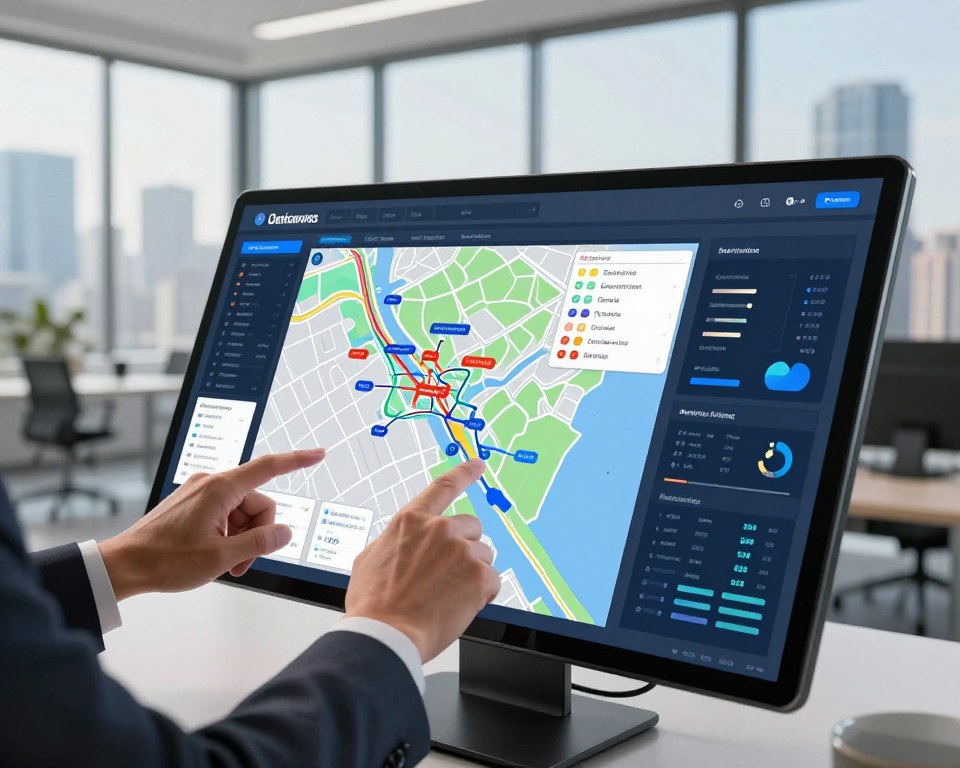
- Create simple dashboards that bring data and information together for faster action.
Designing Your 90-Day Sprint Plan
Launch the plan with a 20-question survey that quickly shows where to act first. Use four questions per level to baseline maturity, then plot results on a heat map so priorities are obvious at a glance.

Baseline maturity with a focused survey and heat map
Run the 20-question survey in the first week. Visualize scores by level on a heat map to expose the two lowest performing areas.
Pick two lowest layers, lock KPIs, and set gates (0/1/2)
Choose the two worst-scoring layers and translate survey findings into measurable goals.
- Lock KPIs: cycle time, time-to-revenue, and defect rate.
- Set control gates: Gate 0 (diagnose), Gate 1 (pilot), Gate 2 (scale).
- Assign a resource owner for each gate to speed decisions and maintain control.
Iterate in two-week workflows with clear entry/exit criteria
After Gate 1, run two-week sprints with defined entry and exit criteria. Keep planning lightweight and protect goals so mid-sprint changes are rare.
Use simple dashboards for real-time tracking, map tasks to processes and projects, and report progress to management weekly. Tie each improvement back to revenue or time saved so the business sees value fast.
Technology and Automation: Building the Real-Time System Layer
Build a real-time system layer that turns scattered signals into clear actions and faster decisions.
Centralize data in a governed repository and automate ingestion with ETL/ELT pipelines. Set freshness SLAs and deploy anomaly alerts so information quality stays high.
Use RPA to remove repetitive tasks and free people for higher-value work. Connect CI/CD to your development streams so releases are faster and safer under strict control.
Move from standalone software to autonomous services that learn. AI can self-heal pipelines, reroute workflows, and suggest fixes before outages affect performance.
- Centralize data, ETL/ELT, freshness SLAs, and anomaly alerts to protect quality.
- Use RPA for routine tasks and CI/CD for rapid, controlled deployments.
- Design services to learn: measure cycle time, error rates, and uptime to prove impact.
- Set service thresholds, capacity limits, and governance so automation scales responsibly.
Cross-Functional Execution: Governance, Talent, and Change Management
When governance pairs with coaching, change actually sticks in your organization.
Set a steady steering cadence with clear decision rights and control so governance supports, not slows, daily operations. Tie meetings to choices, not updates, and make budget guardrails visible so planning stays aligned with measurable goals.
Steering cadence, budget guardrails, and benefits realization
Define a regular review cadence that balances speed and oversight. Assign resource owners who hold tasks and report performance against goals.
Align budgets to benefits realization so funding follows measurable outcomes. This keeps management focused on what moves the needle.
Competencies, certifications, and in-the-flow coaching
Map core skills across functions and certify where needed. Use short, in-the-flow coaching sessions to raise the ability of teams while they work.
Micro-certifications and spot coaching prevent stalled projects and build durable capability across the organization.
Dependency resolution and early wins with champions
Resolve cross-team dependencies early by naming champions and owners. Celebrate quick wins to sustain momentum and make performance visible.
- You’ll set a steering cadence with clear decision rights and control.
- Align budget guardrails to goals and benefits realization.
- Define competencies, certifications, and in-the-flow coaching to raise ability.
- Resolve dependencies early so projects don’t stall across systems and teams.
- Assign resource owners and tasks to make accountability visible at every level.
Embed governance into your system so decisions are timely, auditable, and aligned to business value. For practical tips on cross-team design, see a guide to cross-functional teams.
Operational Efficiency Layers: A Real-World Example
A single project overrun can expose hidden bottlenecks and drain margin faster than you expect. In one IT example, a four-week plan stretched to eight weeks. That doubled cost and delayed revenue while customers grew frustrated.
Diagnosing delays, rework, and overutilization in projects
The root causes were clear: overbooked resources, unclear processes, and missing information for planning. Double-booking created bottlenecks and forced expensive contractors to fill gaps.
Burnout became real—WHO lists it as an occupational phenomenon—and churn raised management risk. Poor data meant leaders reacted late and project quality slipped.
Applying the layers to improve planning, workflows, and revenue
How they fixed it:
- Set SOPs and handoffs to add control and reduce rework across projects.
- Built a central dashboard so data and information for planning were visible in real time.
- Shifted to two-week change cadences to protect time and stabilize delivery.
- Right-sized resource assignments to prevent burnout and cut contractor spend.
- Added light governance to track margin impact and product outcomes across systems.
Hard lessons: a small planning reset, clearer processes, and reliable data shorten cycle time, protect customer goodwill, and restore revenue. Apply this example to equipment-heavy or software work and you’ll see faster, measurable gains.
Conclusion
Close your transformation loop by picking the two weakest areas and running a focused 90‑day plan.
, This model shows a clear way to improve efficiency and raise control across systems. Build one layer at a time so gains are measurable and repeatable.
Focus on the lowest-maturity level first. Use short sprints to prove impact, tie every change to data, and let automation and technology make real‑time adjustments.
When decisions link to trusted information, products and services deliver steady value. Scale the approach across operations to sustain velocity and governance.
Next step: choose your two lowest levels, set the plan, and start building momentum today.